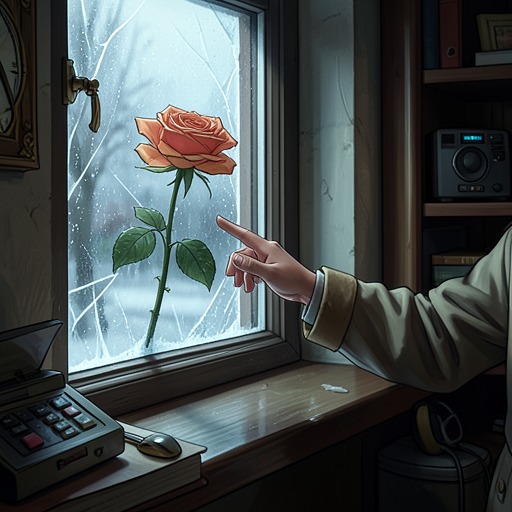
Gerda Rescues Kay
The Snow QueenGerda Rescues Kay is the decisive reunion in which Gerda reaches Kay in the Snow Queen’s palace and breaks the looking-glass shards’ hold on him. Her prayer carries her past the Snow Queen’s living snowflake guards; her tears thaw the ice in Kay’s heart, and the hymn they once sang together restores his recognition of her. The rescue turns the story’s governing contrast—between the palace’s cold, empty order and the children’s enduring affection—into a return journey toward home.
Background and Approach
Before Gerda reaches the palace, the Finland Woman explains that she cannot give the girl greater power than she already possesses: the strength at issue is her own purity and innocence of heart. She sends Gerda with the reindeer toward the Snow Queen’s garden, telling it to leave her by a large bush covered in red berries. The reindeer carries Gerda there, kisses her goodbye, and runs back. Gerda has forgotten her boots and mittens, so she sets out barefoot and barehanded into the cold.
The approach makes the danger visible before the reunion begins. With the sky clear and the northern lights glittering overhead, living snowflakes advance along the ground. They are the Snow Queen’s guards, not ordinary flakes: some resemble porcupines, others twisted serpents, and others bristling bears. Gerda remembers how large the snowflakes once looked through a burning glass, but these creatures are larger still and alive. The apparent beauty of winter has become an organized threat at the entrance to Kay’s prison.
Prayer and Entry into the Palace
Gerda recites the Lord’s Prayer as the guards surround her. Her breath, visible in the severe cold, gathers into steam; as she continues praying, the steam takes the form of little angels. They grow when they touch the ground, wearing helmets and carrying spears and shields. By the time she finishes, a legion stands around her. They attack the snowflake guards, which shiver into fragments, clearing a safe path forward. The angels also stroke Gerda’s hands and feet, and she feels the cold less as she continues toward the castle.
The narrative sets Gerda’s exposed body against the sentries’ menacing forms, then makes her prayer an action with immediate consequences: the guards are defeated, and she can enter. At that same point, the story briefly shifts attention to Kay. He is not thinking of Gerda and does not imagine that she could be standing outside the palace. His obliviousness sharpens the difference between their situations: she has crossed the frozen landscape to find him, while he remains absorbed in the ice pieces before him.
The palace itself gives that separation a setting. Its walls are formed from drifted snow and its windows and doors from cutting winds; it contains more than a hundred rooms, some extending for miles. The vast halls are empty, icy, and glittering beneath the shifting northern lights. When Gerda passes through the great door, winds still rage around her, but her prayer quiets them. She continues into the hall and sees Kay.
Recognition and the Breaking of the Spell
Gerda recognizes Kay immediately, rushes to him, and throws her arms around his neck. She tells him, “Kay, dear little Kay, I have found you at last.” He remains stiff, cold, and still. The embrace alone does not instantly restore him: the sight of his friend meets a boy whose heart and perception are still under the influence of the glass.
Gerda’s hot tears fall on Kay’s breast, penetrate to his heart, and thaw the lump of ice there. They also wash away the small piece of glass lodged in his heart. Then she sings the hymn they had learned together: “Roses bloom and cease to be, / But we shall the Christ-child see.” Its return connects the rescue to a moment from an earlier spring, when the children sat among the roses on the roof and sang together. The refrain carries their shared past into the frozen hall without changing its words.
Kay then bursts into tears. As he weeps, the splinter of glass swims out of his eye; he recognizes Gerda and asks where she has been and where he has been. He looks around at the cold and the enormous emptiness, now seeing the palace differently. The change occurs in stages: Gerda’s tears thaw and clear his heart, the remembered hymn prompts his own tears, and the shard leaves his eye. Only after this physical and emotional reversal can Kay respond to Gerda as the friend he had been.
Freedom and the Journey Back
Gerda and Kay laugh and weep with joy, and Kay becomes healthy and cheerful as she kisses his cheeks, eyes, hands, and feet. The kisses bring warmth and color back to him: his cheeks bloom, his eyes shine like Gerda’s, and his hands and feet are restored. The ice pieces dance at the sight of their reunion. When the children tire and lie down, the pieces arrange themselves into the letters of the word the Snow Queen had set Kay to discover in order to become his own master and gain the world and a new pair of skates. The formed word is Eternity. Its appearance confirms his freedom; the Snow Queen may return, but the condition she imposed has been fulfilled.
They leave the palace hand in hand, speaking of their Grandmother and the roses on the roof. Outside, the winds are at rest and the sun breaks through. At the red-berried bush, the reindeer is waiting with another young reindeer whose milk is warm. The children drink and kiss the animal, then travel first to the Finland Woman, who warms them in her hot room and advises them about the journey. The Lapland Woman has prepared new clothes and put their sleighs in order. Both reindeer accompany them to the country’s boundary, where the first green leaves are budding; there the children take leave of the reindeer and the Lapland Woman.
Their homeward route also brings them back into contact with the Robber-girl. A horse Gerda recognizes from the Golden Carriage of the Prince and Princess carries her, with a shining red cap and pistols at her belt. The Robber-girl recognizes Gerda too, and their meeting is joyful. She teases Kay for making someone go to the end of the world to find him, promises to visit if she passes through their town, and rides away. Gerda and Kay continue together, hand in hand, as spring grows greener around them.
Homecoming and Significance
The children recognize their town by its tall church steeples and enter to the sound of the bells. At their Grandmother’s house, they find the little room as it used to be: the old clock still ticks, and the roses outside are in full bloom, peeping through the window. Yet time has passed in a way the familiar room first seems to conceal. Gerda and Kay have grown into a woman and a man; they sit in the small chairs where they once sat as children and hold hands. The cold grandeur of the Snow Queen’s palace fades from their memories like a painful dream.
Their Grandmother reads from the Bible, “Except ye become as little children, ye shall in no wise enter into the kingdom of God.” Looking into each other’s eyes, Gerda and Kay understand the hymn’s words anew: “Roses bloom and cease to be, / But we shall the Christ-child see.” The rescue therefore ends not only with Kay physically free and the pair returned home, but with the childhood song joined to the Grandmother’s reading. They are grown, yet remain children at heart; the closing summer and renewed roses answer the palace’s sterile winter with warmth, living growth, and restored companionship.